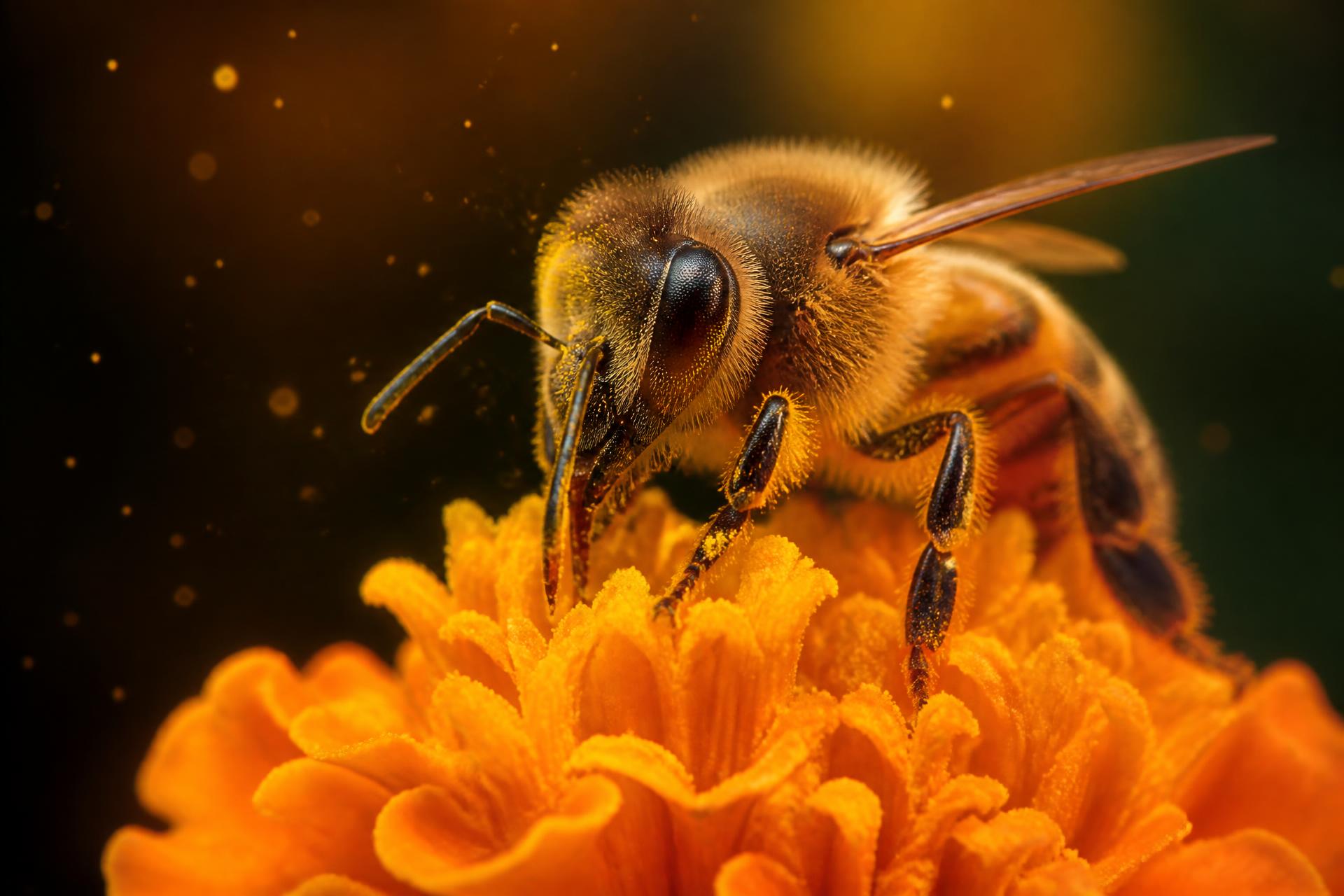
Indian honey bee
Apis cerana
Native to India, docile and highly adapted to local flora. Backbone of small-scale apiculture.
The PAQ Bees
Pollinators restoring biodiversity and food.
Species gallery
The lifecycle
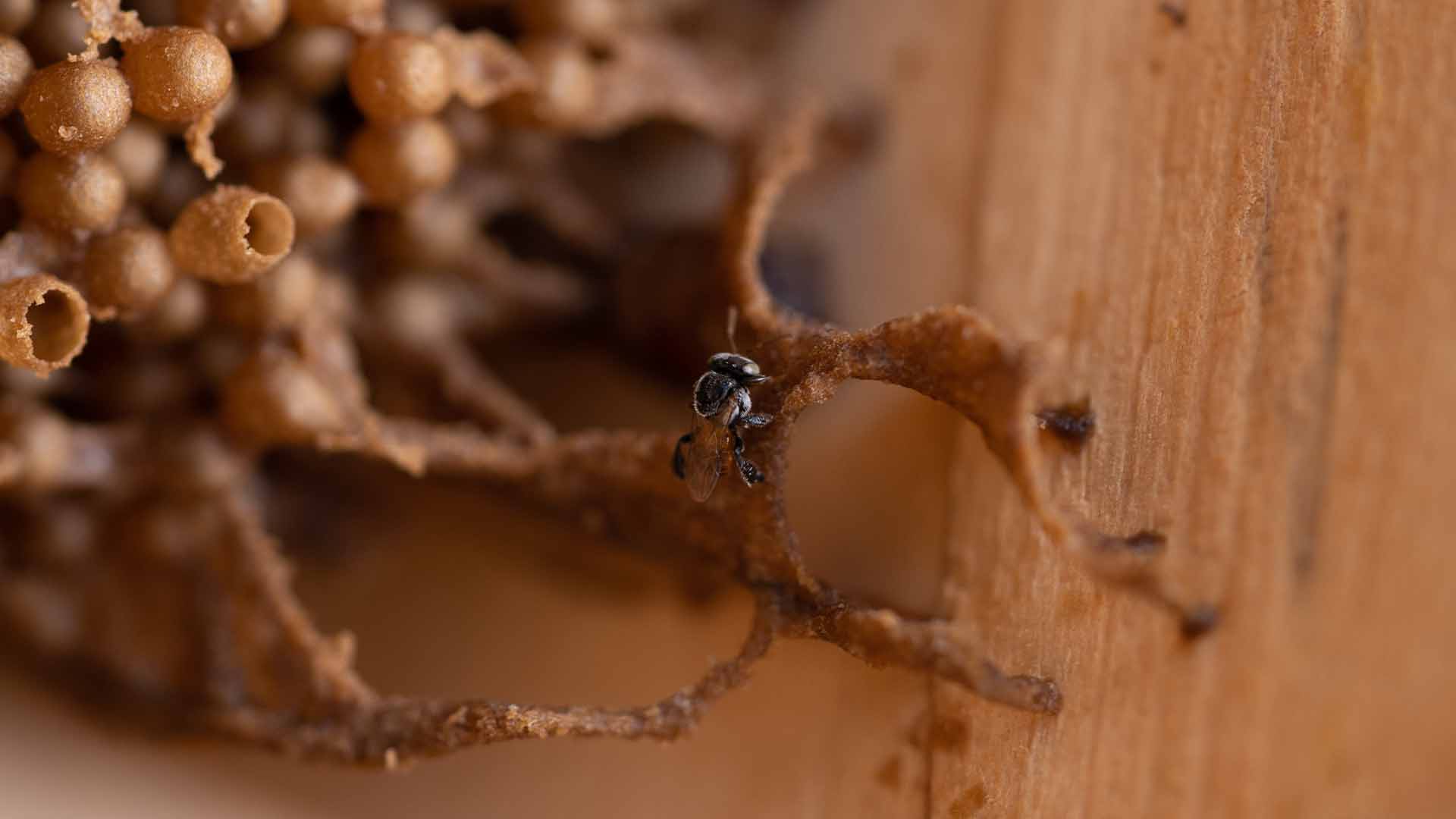
The queen lays each fertilized egg in a hexagonal cell.
Nurse bees feed the larva royal jelly and bee bread.
The cell is capped. Inside, the body of an adult bee forms.
The bee emerges — cleaner, nurse, guard, then forager.
She travels miles a day, pollinating our food, our forests, our future.
Hive Explorer · scroll to descend
One queen anchors every colony. She lays up to 2,000 eggs a day and secretes pheromones that hold 50,000 sisters in perfect coordination.
Hive anatomy
Tap a zone in the hive to reveal its role.
The pollination chain
A flower opens its calyx and secretes nectar as a lure.
A bee brushes pollen from anthers as she drinks.
Cross-pollinated crops yield more fruit, more seed, more life.
The food we eat depends on this exchange happening — every day.
Food dependency
bites of food you eat exist because a pollinator moved from flower to flower.
The global crisis
"Bee populations have collapsed by up to 40% in a decade. Climate stress, pesticides, habitat loss, and disease are unravelling the pollination systems every human meal depends on."
Loss of managed colonies over the last decade
Of global food crops depend on pollinators
People rely on smallholder farming — and its bees
Honey ecosystem
A protected, monitored colony on a farm or forest edge.
Cold-spun, un-heated, un-adulterated — pure honey.
Small-batch, batch-traced, quality-certified.
72 bottles a year, delivered to the family that protects the queen.
Biodiversity relationships
Now it's your turn
Protect a colony. Support a farmer. Change a food system. Start with one hive.