A Hopeful Interaction with UNEP Copenhagen Climate Centre — Climate-Resilient Cities
Community · Dispatch · 5 min read
What a conversation around climate-resilient cities revealed about bees, biodiversity, local livelihoods, urban monitoring and the value of hopeful questions.
Some conversations end with an announcement. The most valuable ones can begin with a better question: what would a climate-resilient city look like if its living systems were treated as infrastructure?
From large infrastructure to living infrastructure
Climate-resilient cities are often discussed through drainage, buildings, transport, energy and heat action plans. These systems are essential. Our interaction with the UNEP Copenhagen Climate Centre encouraged us to think about another layer: the plants, pollinators, farms, gardens and communities that make urban regions biologically functional.
UNEP Copenhagen Climate Centre supports developing countries in lower-carbon development and the integration of climate resilience into national development. For PAQ, this creates a valuable meeting point between global climate planning and the small, distributed systems we observe on farms and in cities.
What bees can contribute to the urban conversation
Bees should not be described as perfect environmental sensors. Their behaviour is influenced by species, colony strength, forage, weather, disease, pesticides and management. Yet this sensitivity is precisely why carefully interpreted bee data can contribute to environmental understanding.
A monitored colony can record internal temperature, humidity, resource movement and changes in collective activity. When multiple colonies are placed responsibly across different urban landscapes, researchers can compare how colonies respond to heat, vegetation, water availability and seasonal flowering. The data cannot replace air-quality stations, biodiversity surveys or meteorological systems. It can add a living layer to them.
A resilient city must also feed its pollinators
Urban pollinator programmes sometimes focus on installing hives. The harder question is whether the city can support them. Are there diverse flowering plants across seasons? Are nesting sites protected for wild bees? Are pesticides managed? Is clean water available? Can a colony survive an extreme heat week? Will maintenance continue after the launch event?
These questions shift attention from the object to the system. A beehive becomes meaningful when it is part of a network of gardens, native plants, trained caretakers, schools, institutions and local data.
From Ahmedabad to Copenhagen
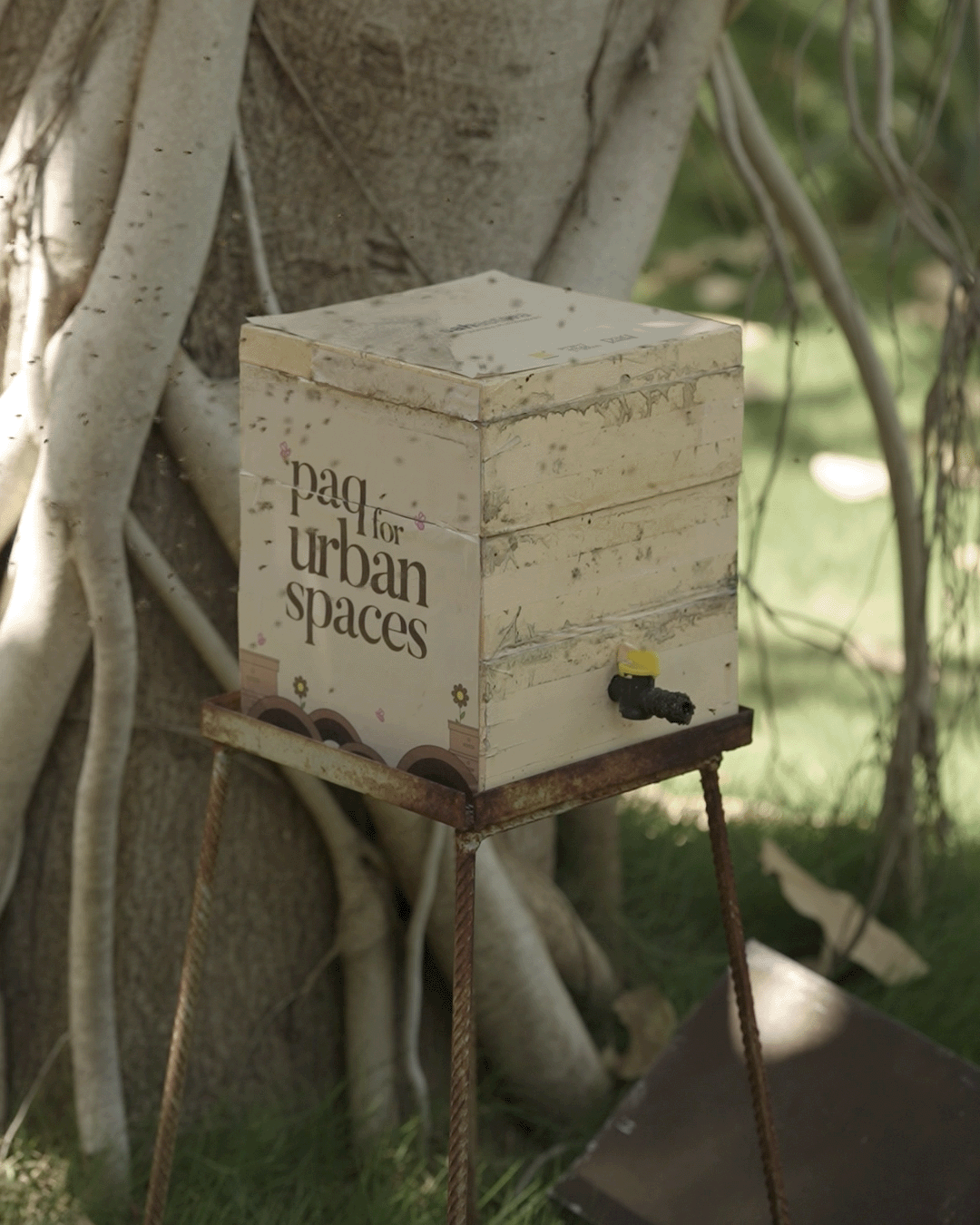
Cities such as Ahmedabad face intense summer heat, rapid construction and the loss or fragmentation of small habitats. They also contain parks, institutional campuses, housing societies, school grounds and roadside landscapes that can be redesigned as connected pollinator spaces.
Our hopeful takeaway from the interaction was that local work can speak to global climate questions when it is measured clearly. An urban stingless-bee site, a pollinator-friendly school or a monitored community garden may be small individually. Across a city, they can become a distributed experiment in biodiversity, public participation and microclimate resilience.
The questions we want to pursue
Can bee-colony patterns be responsibly combined with heat, vegetation and air-quality data? Can cities map flowering gaps that leave pollinators without food? Can schools participate in observation without disturbing colonies? How do we design urban programmes that support wild native bees rather than creating competition through excessive managed hives? Can environmental data also create work and learning opportunities for local communities?
These are research questions, not finished claims. They require ecologists, city planners, technology teams, public institutions and communities to work together.
Hope becomes useful when it creates a next step
The interaction was meaningful because it widened the scale of the conversation. PAQ began with the relationship between a bee colony, a farmer and an adopter. Climate-resilient cities ask how thousands of such relationships might be planned, protected and measured across an urban region.
No single meeting creates a resilient city. But a serious conversation can identify the first shared question. From there, a pilot, a dataset, a public garden or a research partnership can begin.
Next step
Explore monitored urban pollinator sites and climate-resilience research with PAQ.
Adopt a queen →