Food trust needs evidence. Rapid screening can help identify unusual samples and direct them toward proper laboratory verification.
Most food adulteration is invisible at the point of purchase.
A familiar colour, a trusted label or a premium price cannot confirm what a product contains. Adulteration may involve dilution, substitution, undeclared ingredients, artificial enhancement or misrepresentation of quality. The result is a loss of trust and, in serious cases, a food-safety risk.
Consumers need better questions
India’s food regulator, FSSAI, has published consumer resources such as the DART manual to demonstrate simple awareness tests for common adulterants. These tools are useful for education, but many quality parameters still require validated laboratory methods and trained interpretation.
The gap lies between suspicion and a laboratory result. Sending every sample to a lab can be slow or expensive, while relying on appearance can miss important differences.
Rapid screening as a first layer
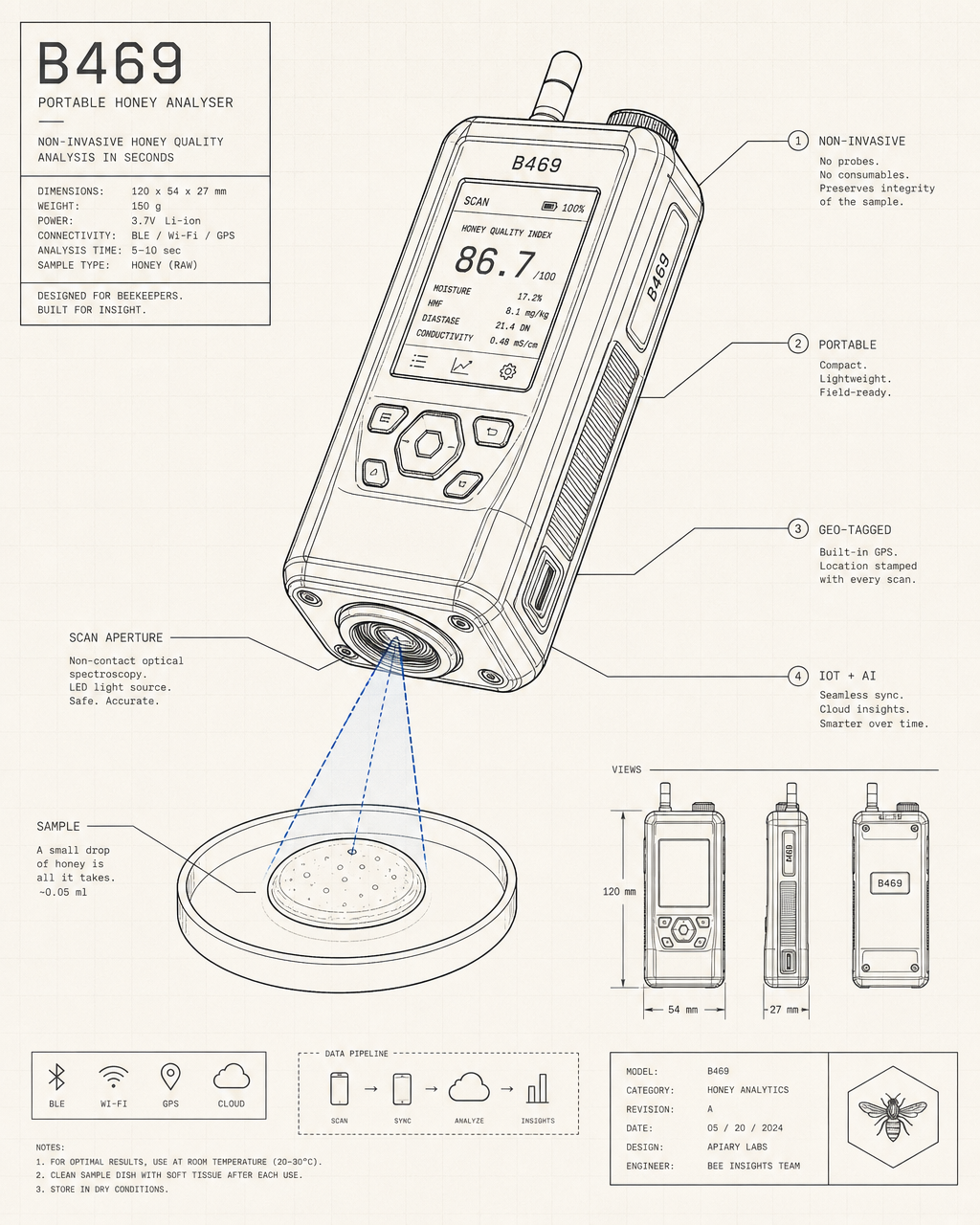
PAQ’s B469 prototype explores spectroscopy and machine learning to screen solids and liquids within seconds. A spectral signature can be compared with trained reference data to estimate parameters or flag a sample that behaves differently from the expected range.
This type of device should be understood as a decision-support and screening tool. It does not replace statutory sampling, accredited laboratory testing or regulatory action. Its value is speed: identifying which batch may need deeper verification, supporting field teams and making quality conversations more evidence-led.
From food testing to fair trade
Quality technology can also protect honest producers. When genuine honey, spices or farm products can be distinguished more consistently, farmers and producer groups have a stronger basis for traceability and fair pricing.
The fight against adulteration will require regulation, laboratories, responsible businesses, informed consumers and faster screening tools working together.