PAQ’s Integrated Hive Monitoring System turns temperature, humidity, weight and acoustic patterns into signals a beekeeper can investigate.
A beehive is communicating all day. The challenge is learning how to listen.
Bees regulate heat, move air, store nectar, raise brood, defend the entrance and respond to changes in weather. These activities create measurable patterns inside and around the hive.
What IHMS listens to
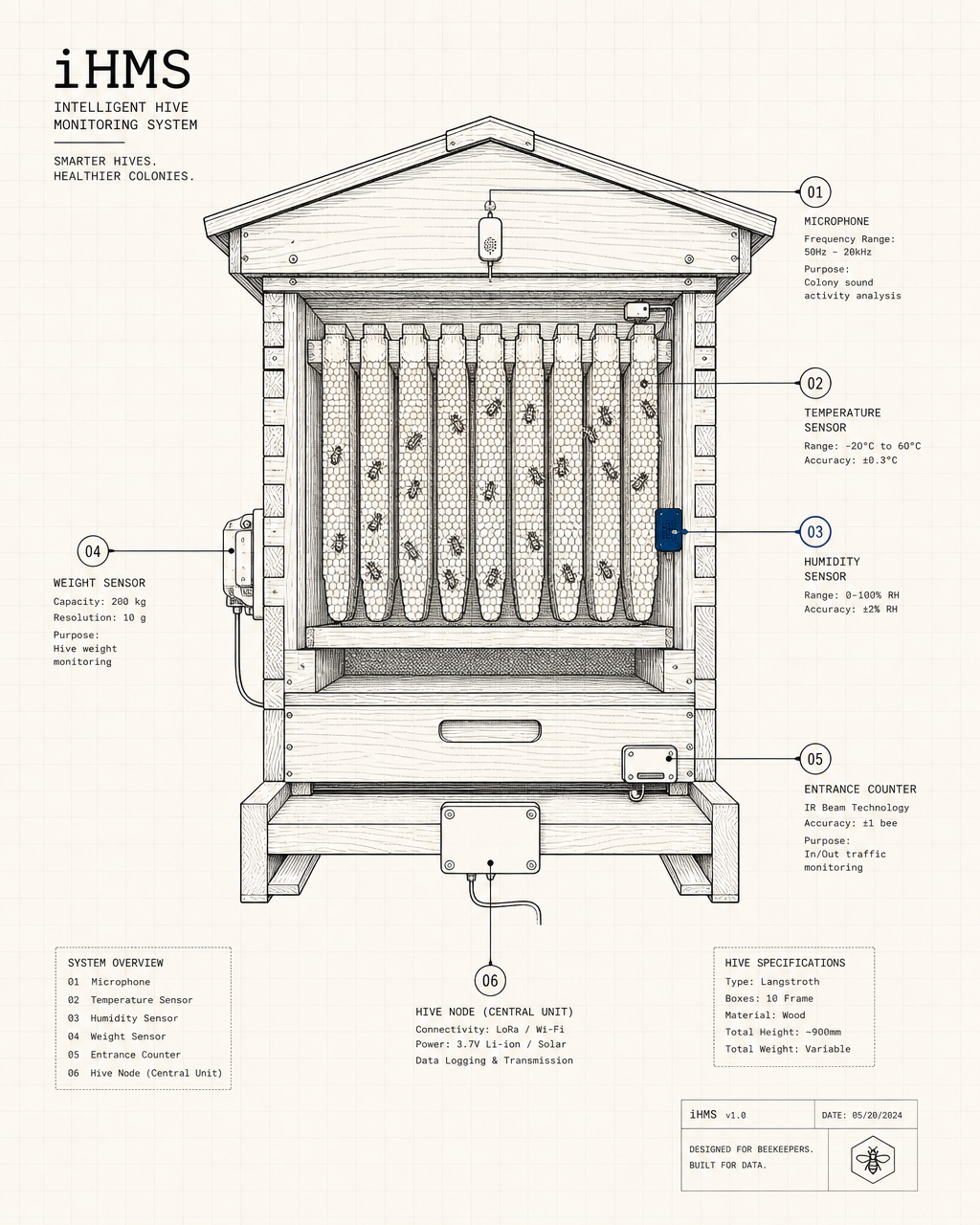
PAQ’s Integrated Hive Monitoring System is designed to record parameters such as temperature, humidity, hive weight and acoustics. Each signal answers a different question.
Temperature and humidity can show whether the internal environment is changing. Weight can indicate nectar collection, consumption, harvest or an abrupt disturbance. Acoustic patterns may help identify unusual colony behaviour that deserves inspection. Location and connectivity features can support migration records and theft alerts where deployed.
From data to an alert
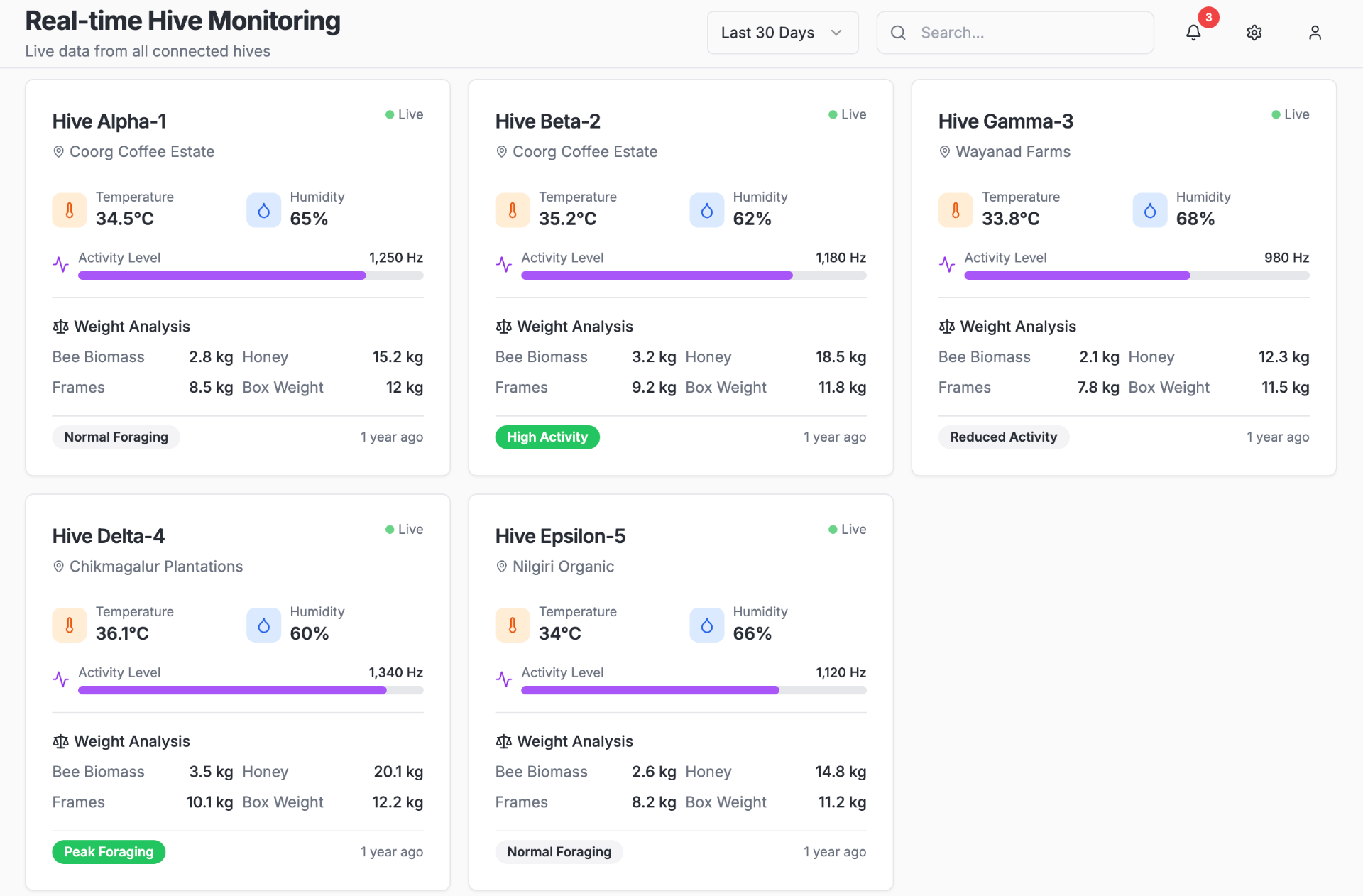
One unusual reading rarely tells the whole story. The useful signal often comes from a pattern: a temperature rise that does not settle, a weight drop at an unexpected time, reduced activity during a known bloom or a sound profile that differs from the colony’s baseline.
The system can flag the pattern. A beekeeper or field team must then verify what is happening. The cause may be heat, forage shortage, queen issues, swarming preparation, water stress, pests, movement or a sensor problem.
Technology that respects the beekeeper
IHMS is intended to make limited human attention more effective. In a large cluster, a beekeeper cannot open every colony every day. Prioritised alerts can help identify which hive needs a visit, while stable colonies remain undisturbed.
If bees could talk in human language, they might ask for shade, water, forage or immediate help. IHMS works toward a practical version of that conversation: signals from the colony, interpreted by people who understand bees.