Understanding Native Bees in the Hills of Gujarat and Uttarakhand
Bees · Field Notes · 6 min read
Field notes on how landscapes in Gujarat and Uttarakhand shape native bee species, nesting behaviour, forage and conservation priorities.
The phrase “native bee” sounds simple. On the ground, it opens a much larger story of altitude, heat, forest edges, old walls, hollow trees, crop flowers and local knowledge.
Native bees are not one category
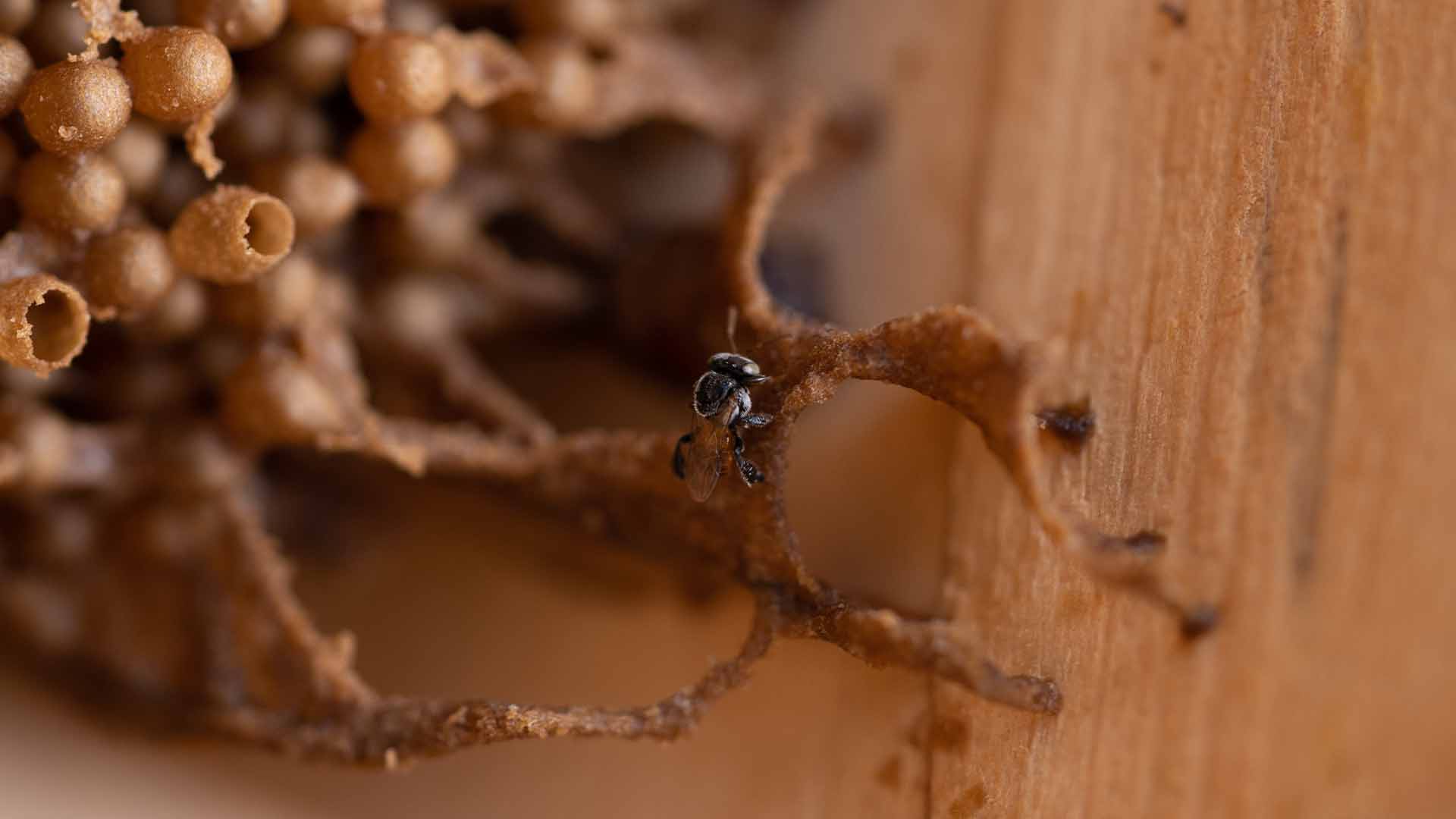
India’s pollinator story extends far beyond a single managed honeybee. Native bee communities include cavity-nesting honeybees, open-nesting honeybees, stingless bees, carpenter bees, leafcutter bees, sweat bees and many other solitary species. Some live in colonies; many do not. Some store harvestable honey; most should never be judged by how much honey they produce.
Their shared value is ecological. Different body sizes, tongue lengths, nesting habits and daily activity patterns allow different bees to visit different flowers. A landscape with multiple bee groups is often more resilient than one dependent on a single managed species.
What Gujarat teaches us
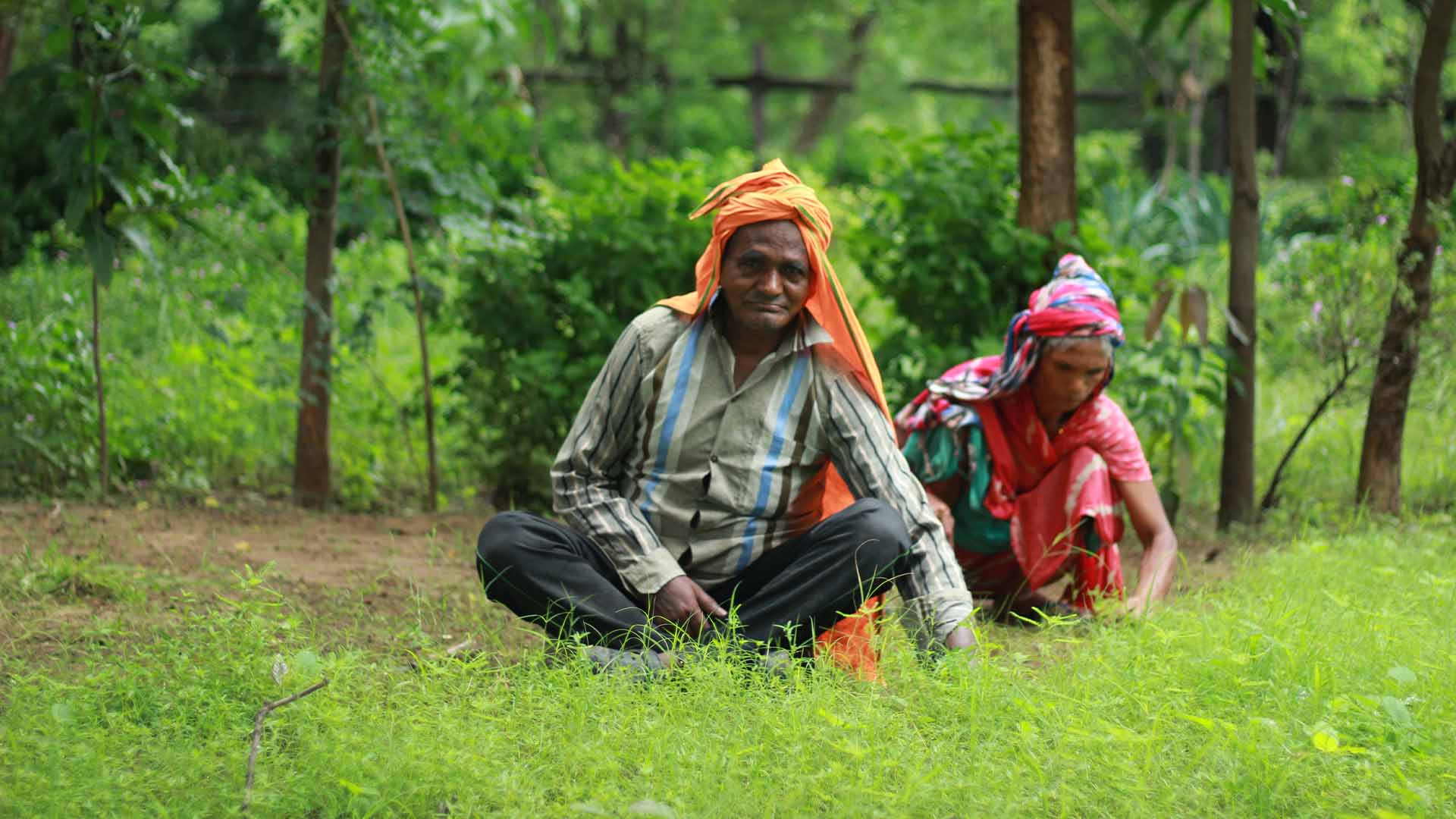
Gujarat contains dry agricultural plains, coastal systems, forested eastern belts, expanding cities and irrigated crop mosaics. Bee life changes across these conditions. Small cavity-nesting colonies may find shelter in old walls or tree hollows. Open-nesting species respond to large trees and undisturbed branches. Solitary bees depend on soil, stems, wood cavities and small nesting spaces that are easily removed during intensive cleaning or construction.
In hot landscapes, the location of a nest can matter as much as the species. Shade, surface temperature, water and the distance between flowering patches influence whether a site remains usable. Urban areas may unexpectedly support bees when gardens, balconies, institutional campuses and old structures provide a sequence of flowers and nesting opportunities. They can also become traps when pesticide use, heat-reflecting surfaces or sudden habitat removal interrupts the colony’s cycle.
What Uttarakhand teaches us
The hills of Uttarakhand create a different set of conditions. Altitude changes temperature, rainfall, flowering periods and the length of the foraging day. The Indian hive bee, Apis cerana, has a long relationship with hill communities and is valued for its adaptability to local environments.
Traditional practices, including wall hives and locally constructed structures, carry knowledge about insulation, seasonal movement and colony behaviour.
Yet “adapted” does not mean unaffected. Long cold periods, damp conditions, erratic flowering, forest change and pesticide exposure can still weaken colonies. A village at one elevation may experience a different nectar flow from another village only a short distance away. Conservation and beekeeping plans must therefore be built with local floral calendars and community observations.
The danger of moving one solution everywhere
A hive model or management schedule that performs well in one landscape may fail in another. The species may be different. The colony may respond differently to heat, rain or disturbance. The timing of brood development and flowering may not match. Even sensor readings require local baselines: the same internal temperature pattern can mean different things depending on season, hive construction and colony strength.
This is also why native bee conservation cannot become a programme of placing boxes everywhere. Many wild bees need undisturbed soil, dead wood, hollow stems, mature trees and pesticide-safe forage rather than managed hives.
Field notes must become long-term knowledge
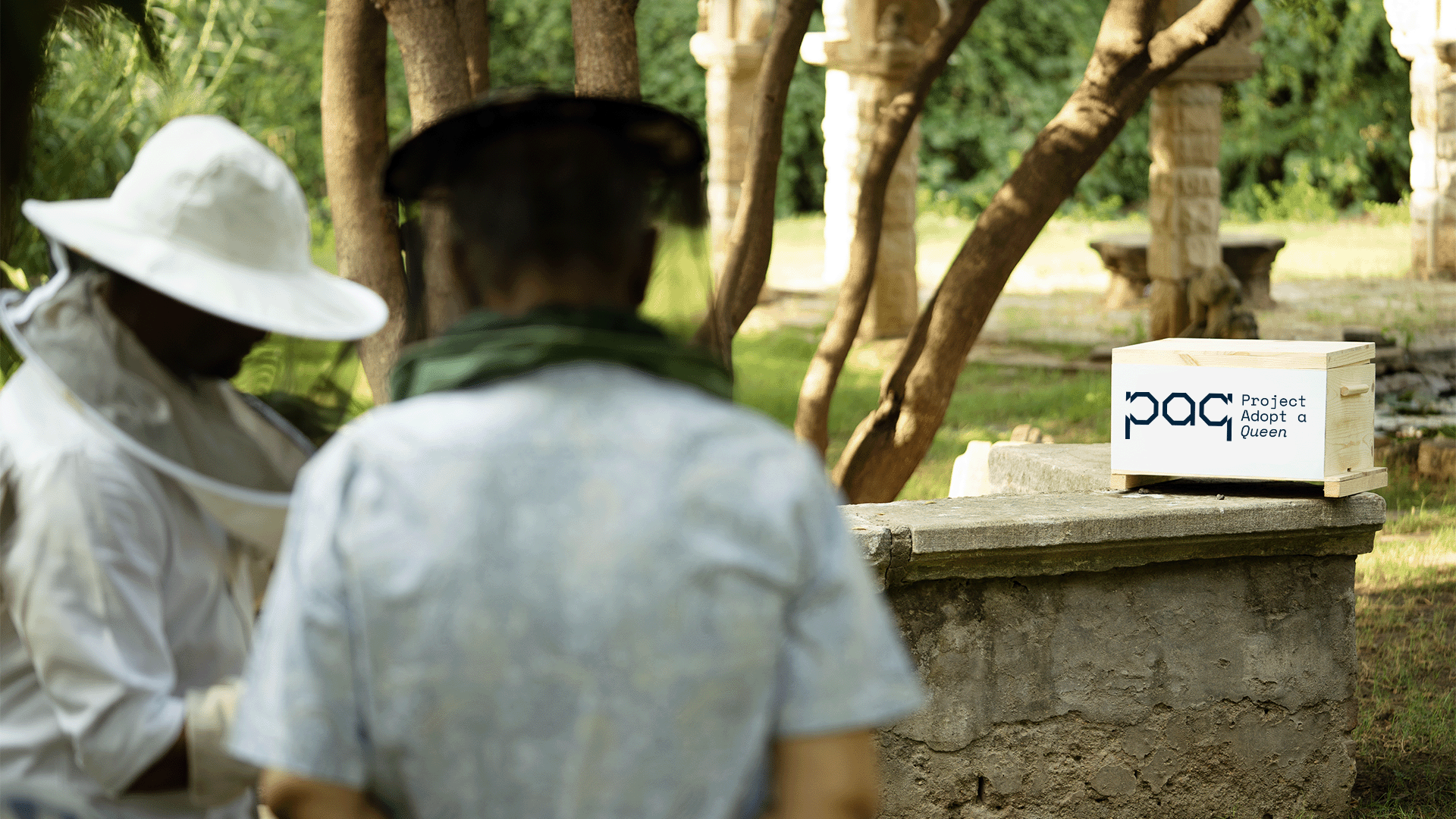
At PAQ, working across Gujarat and Uttarakhand reinforces one principle: observe before intervening. Identify which bees are already present. Speak with farmers and traditional beekeepers. Record nesting sites and flowering periods. Understand heat, rain, elevation and local pesticide practices. Then decide whether the right action is managed beekeeping, habitat restoration, farmer training, research or simply protection of an existing nest.
The hills are not asking us to introduce more bees without thought. They are asking us to understand the bees that already belong there.