How the Buzzing of Bees and Internal Temperature Give Insights About Foraging Behaviour
Technology · Research · 6 min read
How hive acoustics, temperature, weight and weather can be combined to study foraging behaviour without repeatedly opening the colony.
A hive is never silent and its temperature is never accidental. The challenge is to understand patterns without pretending that one sound or one number tells the whole story.
The hive produces a continuous stream of behaviour
Thousands of bees leave, return, ventilate, feed brood, process nectar and communicate inside a dark cavity. To a person standing nearby, this activity becomes a collective hum. To a temperature sensor, it becomes a pattern of stability, warming and cooling. To a weighing system, it becomes the movement of mass across a day.
Each signal is incomplete. Together, they can help researchers and beekeepers ask better questions about what the colony is doing.
What temperature can reveal
Honeybee colonies regulate the brood area within a narrow thermal range. Workers generate heat when conditions are cold and fan or use evaporative cooling when conditions are hot. This makes internal temperature useful because it reflects both the external environment and the colony’s effort to maintain stability.
A regular day-night pattern may show that the colony is regulating normally. Greater fluctuation may appear when the colony is small, brood is absent, the sensor is far from the brood nest or weather stress is strong. Temperature changes can also occur around swarming, winter brood rearing and colony decline. Interpretation therefore depends on sensor placement, hive design, season and inspection records.
Foraging itself interacts with temperature. Bees leave the hive when outside conditions become suitable, while bees remaining inside continue brood care, nectar processing and ventilation. The internal pattern may shift as the balance between field bees and house bees changes.
What sound can reveal
Hive acoustics capture vibration and wing activity produced by many behaviours. Research has explored sound and vibration for queen-related conditions, swarming, disturbance and broader colony-state monitoring. The promise is significant because a microphone can collect information continuously without opening the hive.
But the colony does not speak in simple labels. A louder hive is not automatically a healthier hive. Rain striking the box, nearby machinery, wind, beekeeper activity and differences in microphone position can change the recording. Machine-learning models trained in one region may not transfer directly to another species, box type or climate.
The useful unit is not a single buzz. It is a repeated pattern connected to known events.
A simple foraging day as a data story
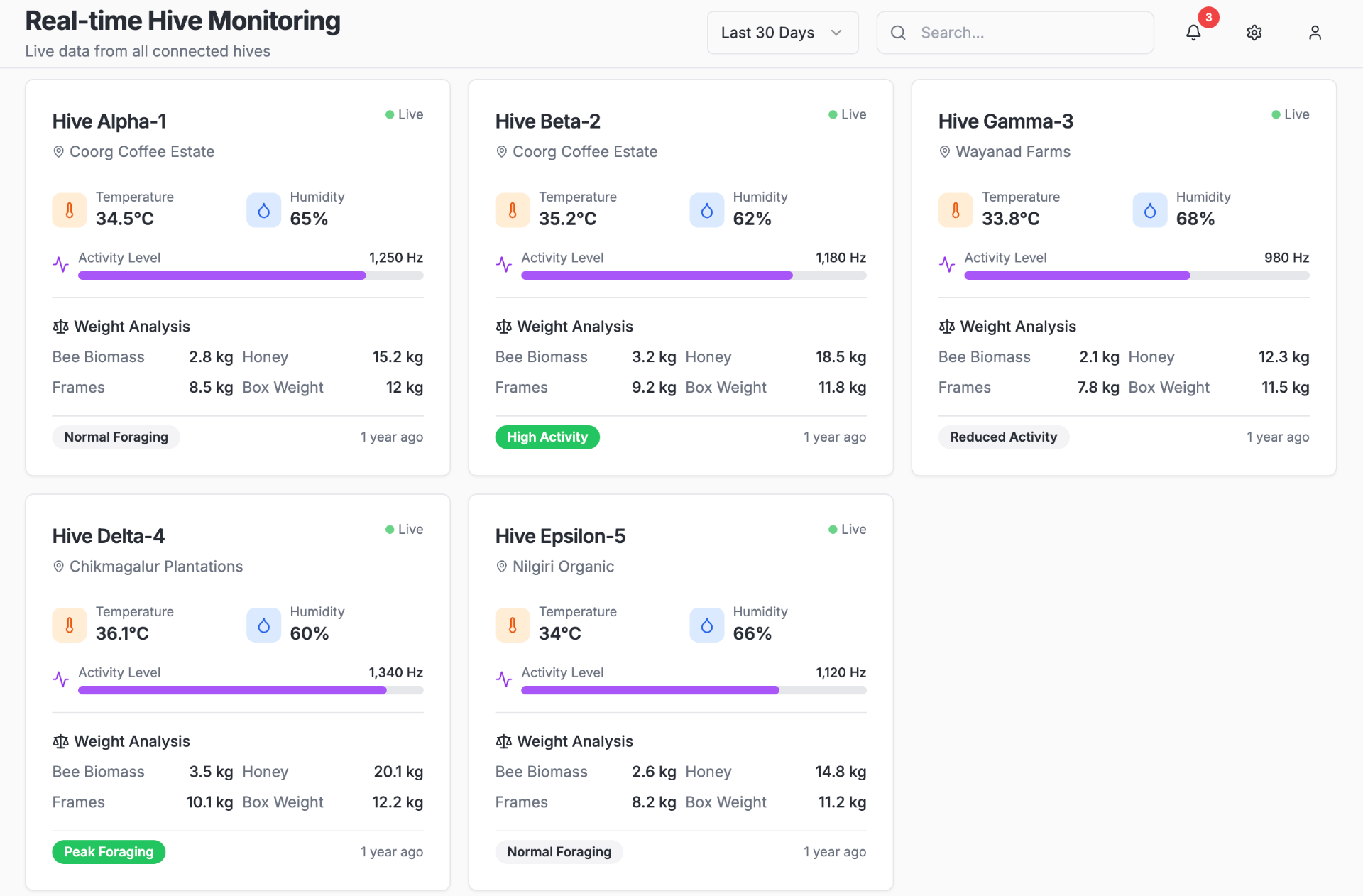
Imagine a colony beside a flowering crop. As morning warms, acoustic activity may rise and hive weight may temporarily fall as thousands of foragers depart. During the day, returning bees bring nectar, pollen and water. Weight may recover or increase. Internal humidity and temperature respond as nectar is processed and workers ventilate the hive. In the evening, flight activity reduces and the colony settles into a different acoustic rhythm.
Now add weather. A sudden rise in wind may stop flights. A hot afternoon may increase fanning and water collection. Rain may produce an apparent weight increase without any nectar flow. Without the weather station and beekeeper’s field note, the hive data can be misunderstood.
From monitoring to evidence
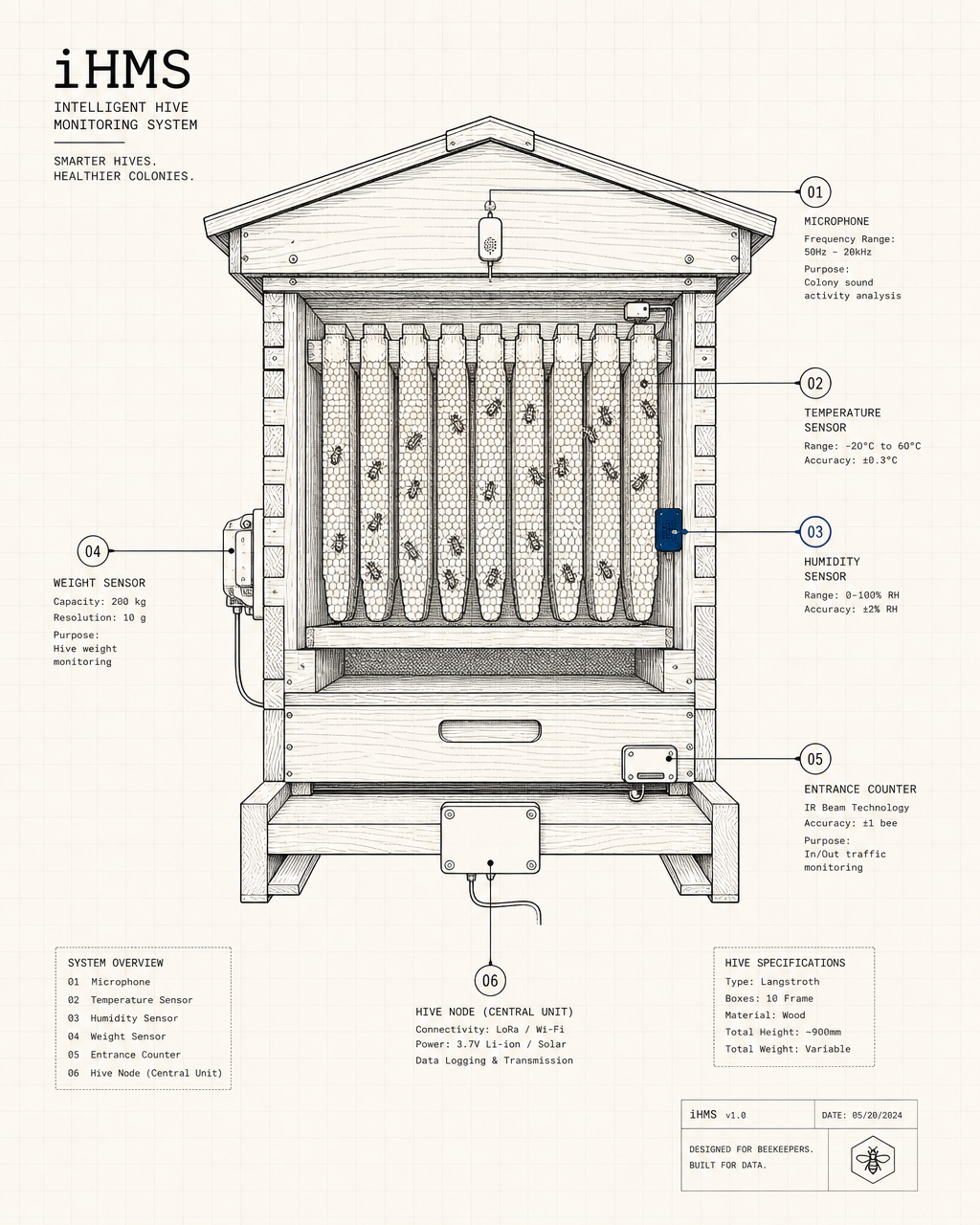
PAQ’s IHMS approach combines internal temperature, humidity, weight and acoustics so that one signal can be checked against another. The long-term goal is to create baselines for species, regions, crops and seasons, and then identify deviations that deserve inspection.
The word “insight” matters. Sensor patterns can guide attention and support research; they should not be presented as a perfect diagnosis. Every alert must be compared with physical inspections and real field outcomes.
When the hive is observed continuously and interpreted responsibly, the buzzing of bees becomes more than background sound. It becomes a measurable part of the farm’s daily life.
Next step
Collaborate with PAQ on annotated hive datasets and region-specific bee behaviour models.
Adopt a queen →