Technology helps PAQ turn field observations into earlier decisions, clearer evidence and stronger trust across hives, farms and food quality.
Agriculture is full of signals. A colony becomes quieter. A crop canopy changes colour. A food sample looks normal but behaves differently. The challenge is noticing the signal early enough to act.
PAQ uses technology to support three connected questions: What is happening inside the hive? What is changing across the farm? What is actually present in the product?
From inspection to continuous awareness
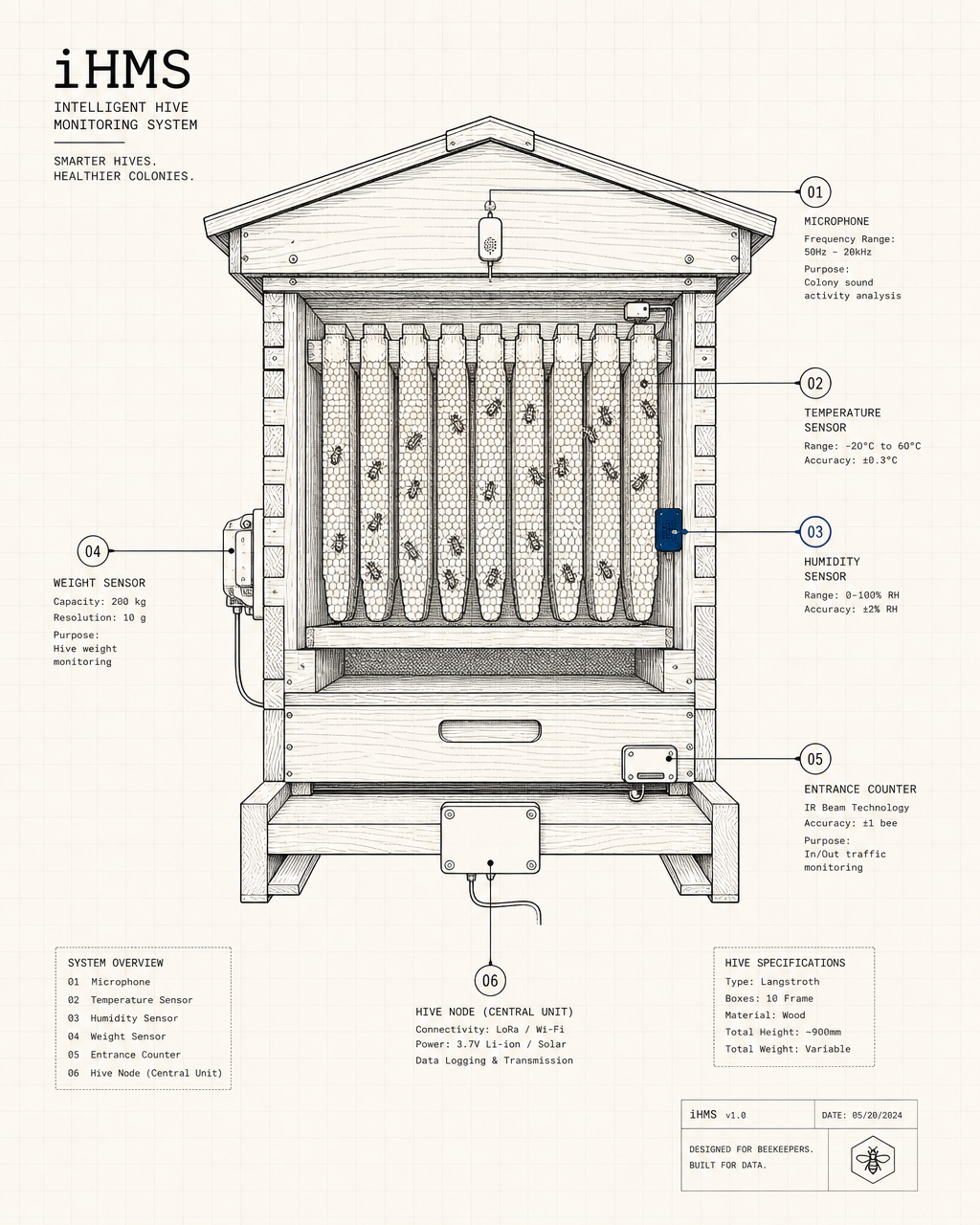
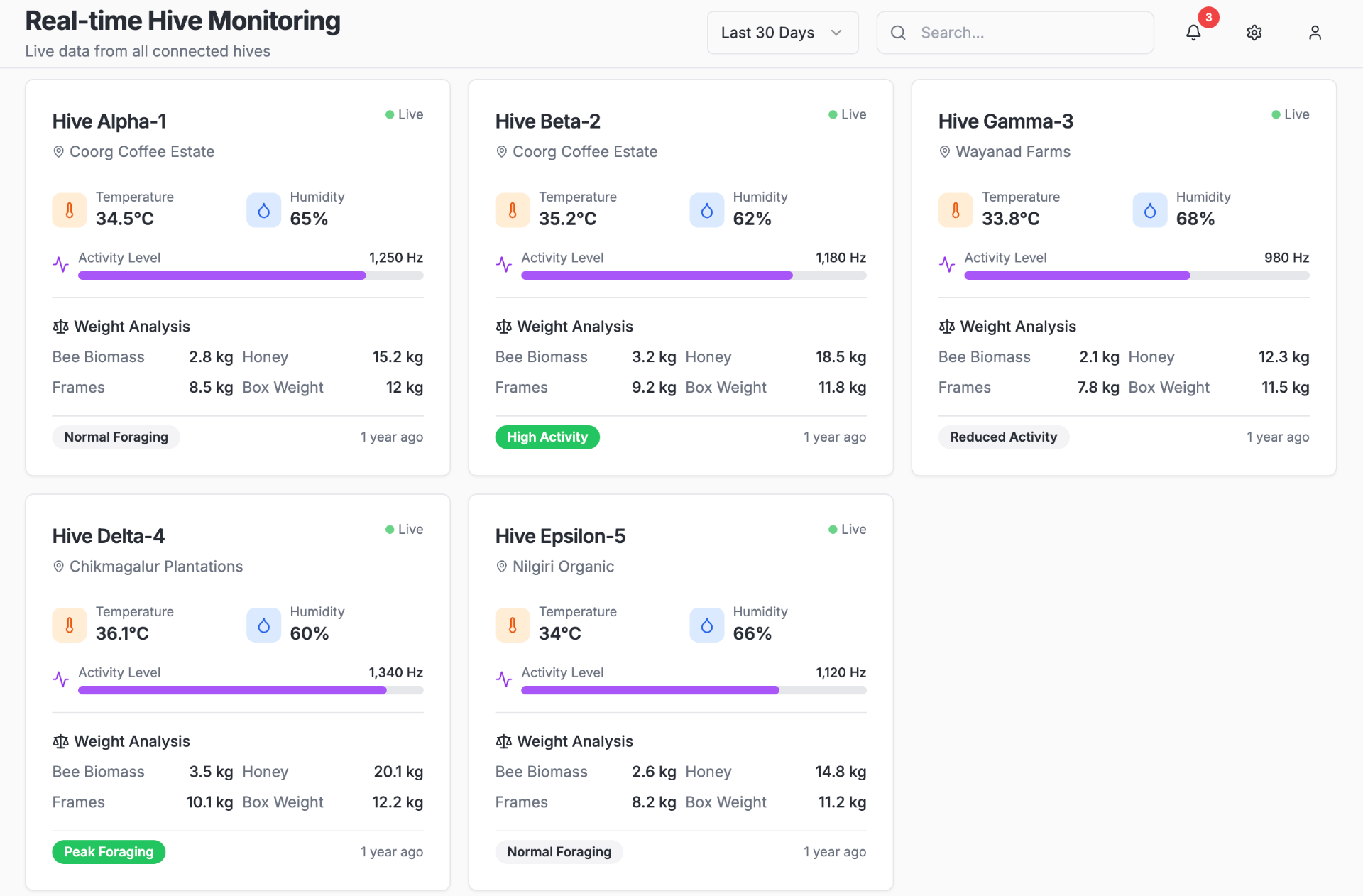
A beekeeper may inspect a colony every few days or weeks. Between inspections, temperature, humidity, weight and acoustic patterns can change. An Integrated Hive Monitoring System can track these conditions and flag unusual patterns for human review. It does not replace the beekeeper; it helps the beekeeper decide where attention is needed first.
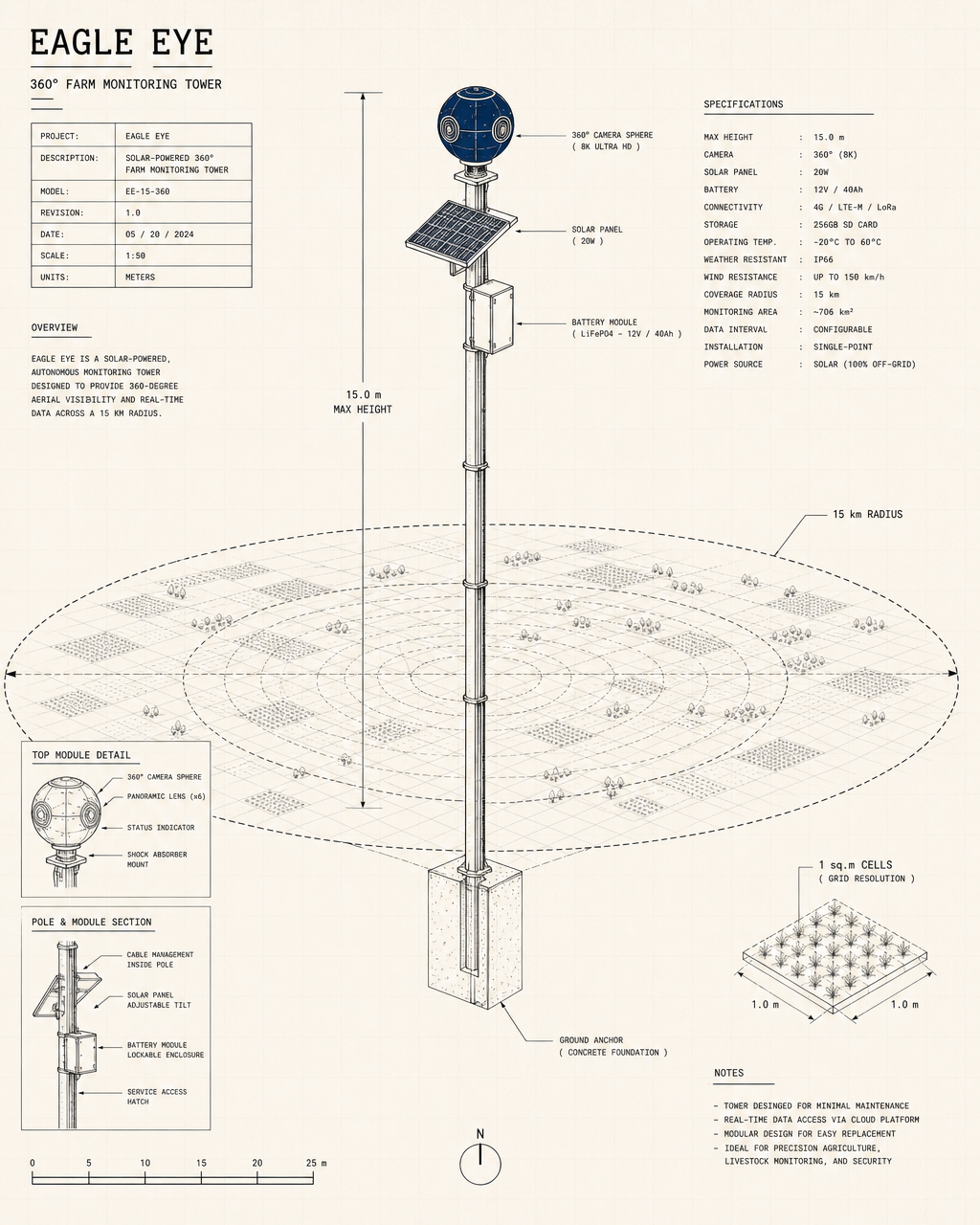
At farm level, optical and environmental observations can help identify crop stress, nutrition patterns, irrigation issues or early disease signals. A wide-area system such as Eagle Eye is intended to create a changing blueprint of the farm rather than a one-time photograph.
Making quality visible
Food quality often depends on parameters that cannot be confirmed by sight, smell or packaging. PAQ’s B469 prototype explores rapid spectral screening of solids and liquids. The purpose is to help users detect anomalies and decide when a laboratory test or deeper investigation is required.
Technology should lead to action
A dashboard has little value unless it changes a decision. Useful technology should help a beekeeper protect a colony, help a field team reach a stressed farm, help a farmer use inputs more precisely, help a buyer question an inconsistent batch, or help a partner understand what its programme achieved.
The strongest rural technology is quiet, practical and accountable. It respects field knowledge, works with imperfect connectivity and produces information people can use.